Węzeł Kliniczna Masterplan
How did it all start?
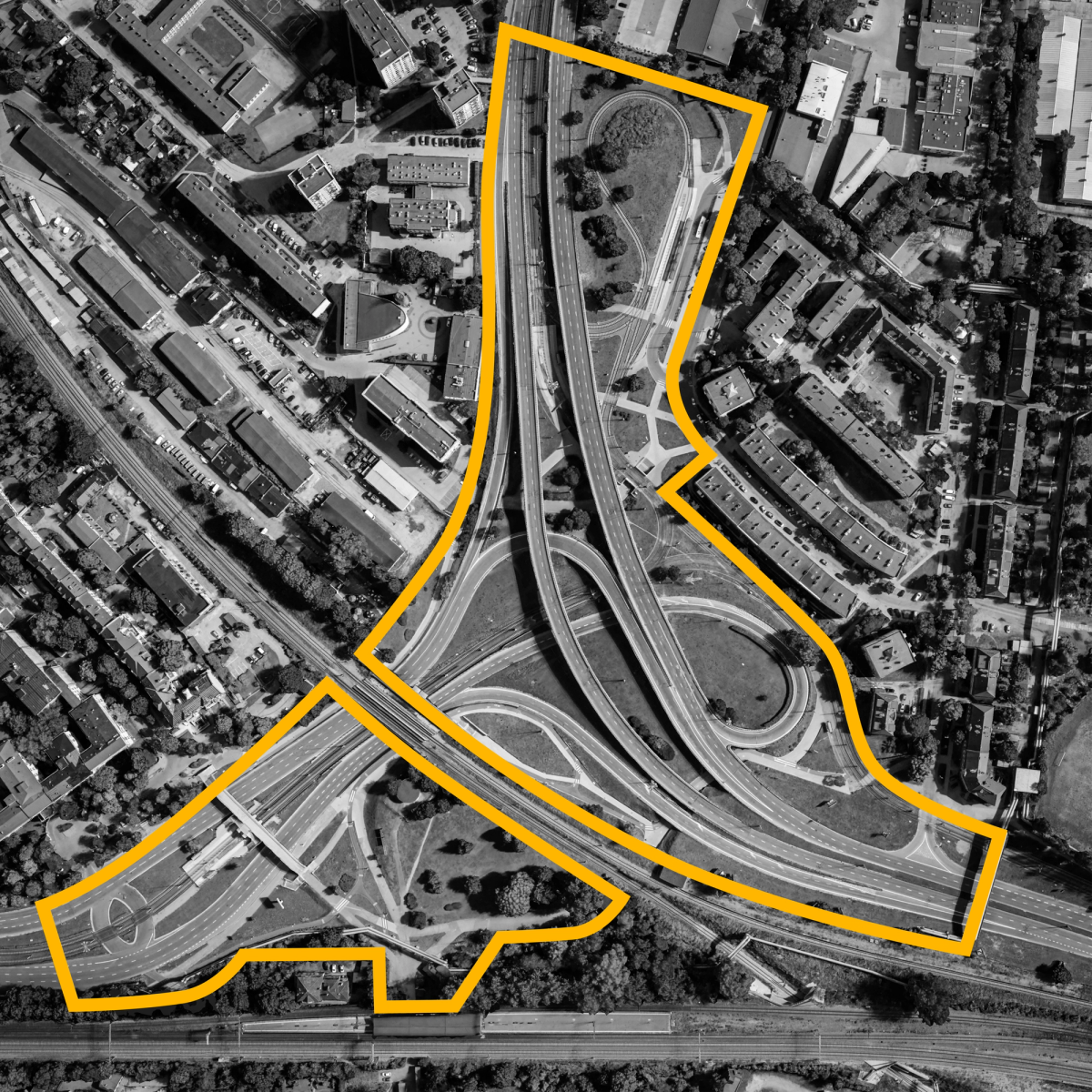
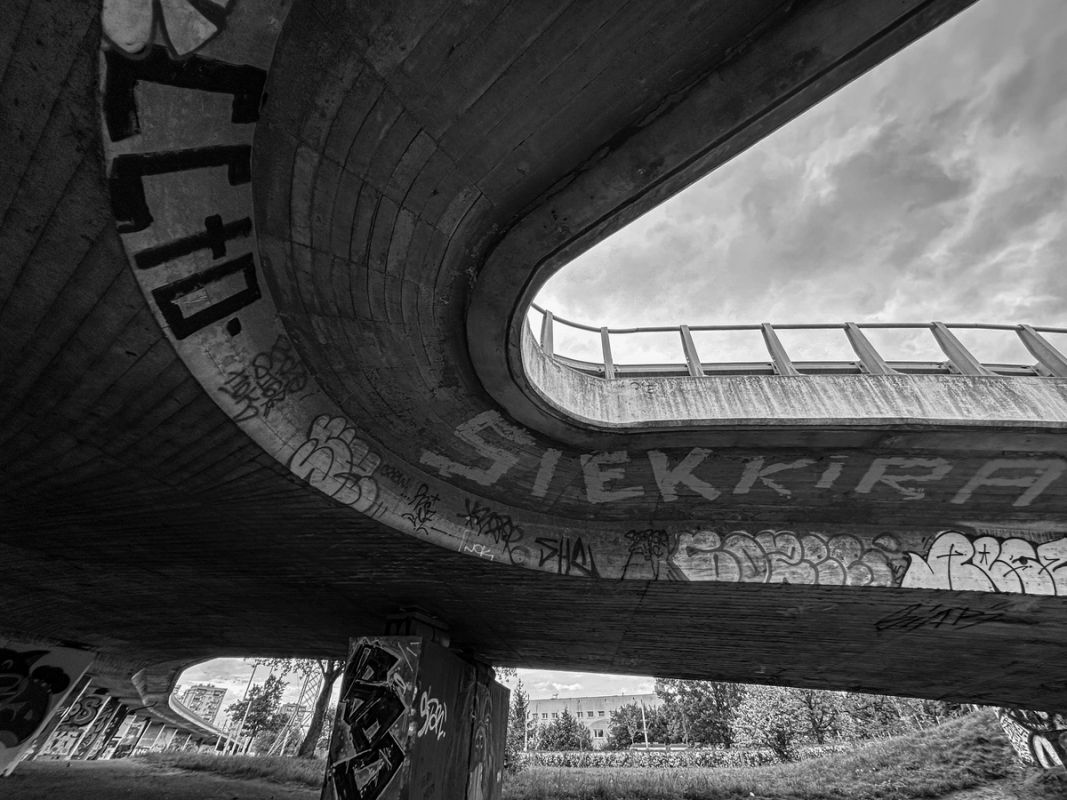
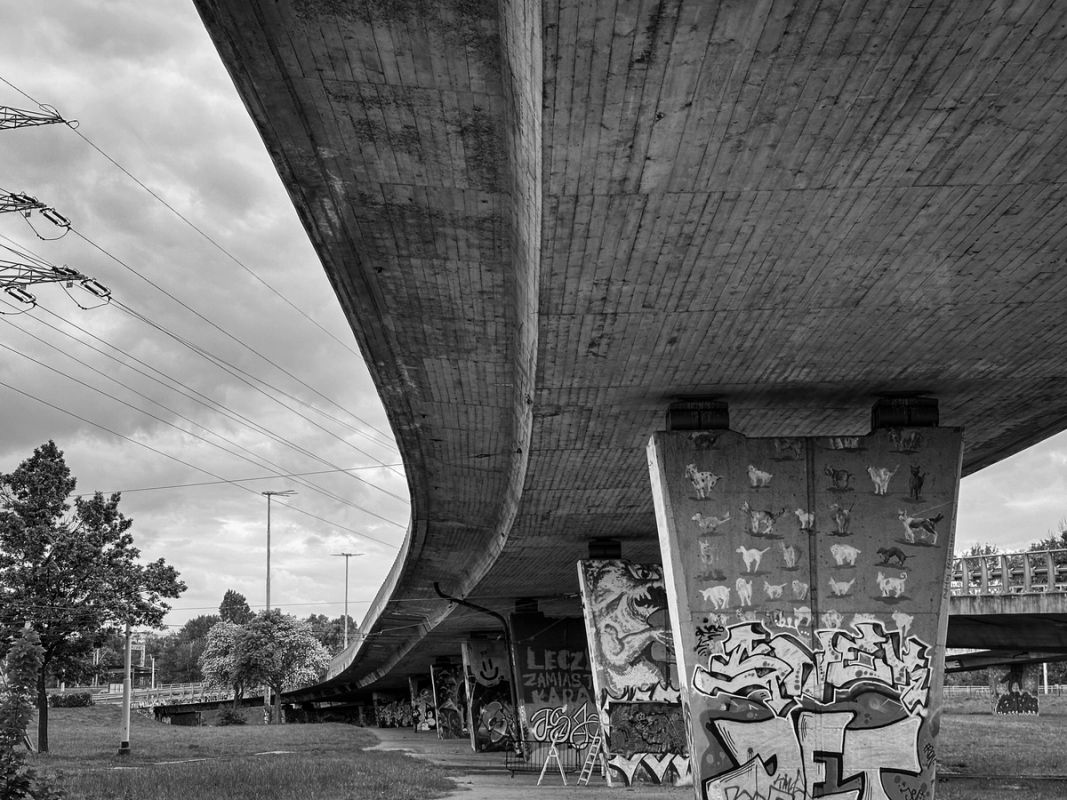
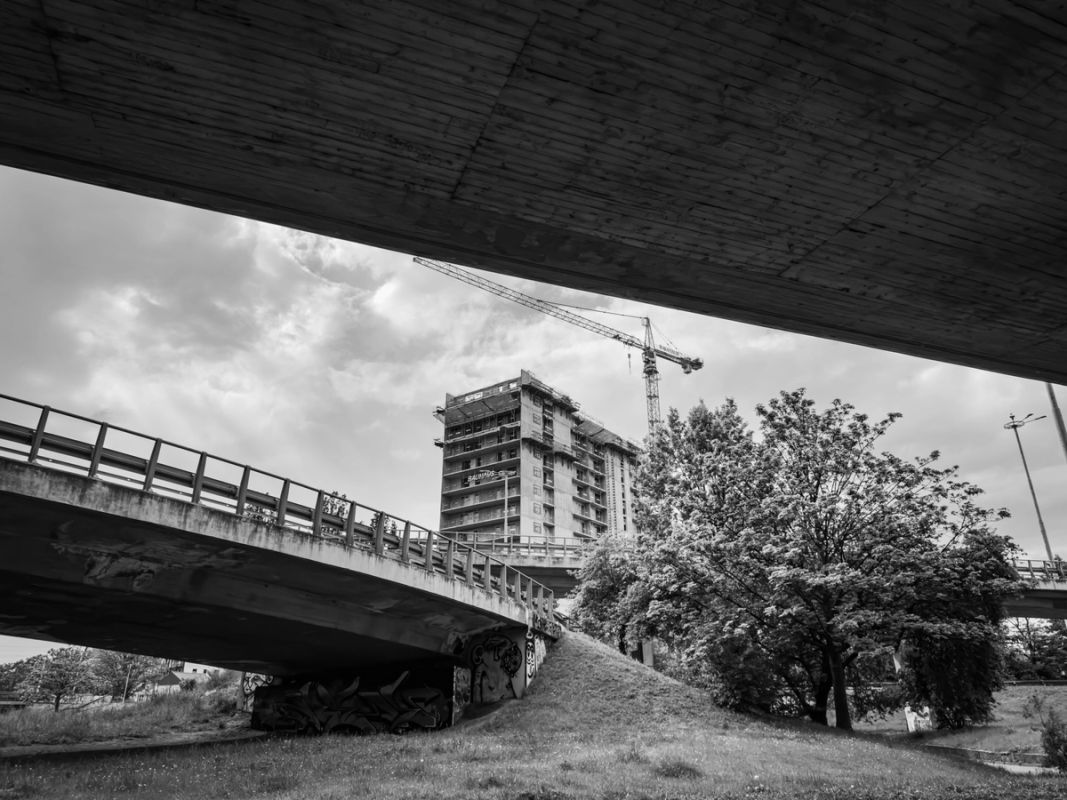
At the beginning of 2024, I took part in an architectural workshop organized by the City Architect's Office, which was held at my school. My task was to redesign the Kliniczna Junction – a road interchange from the 1970s located in the Młyniska district of Gdańsk.
Current major challenges
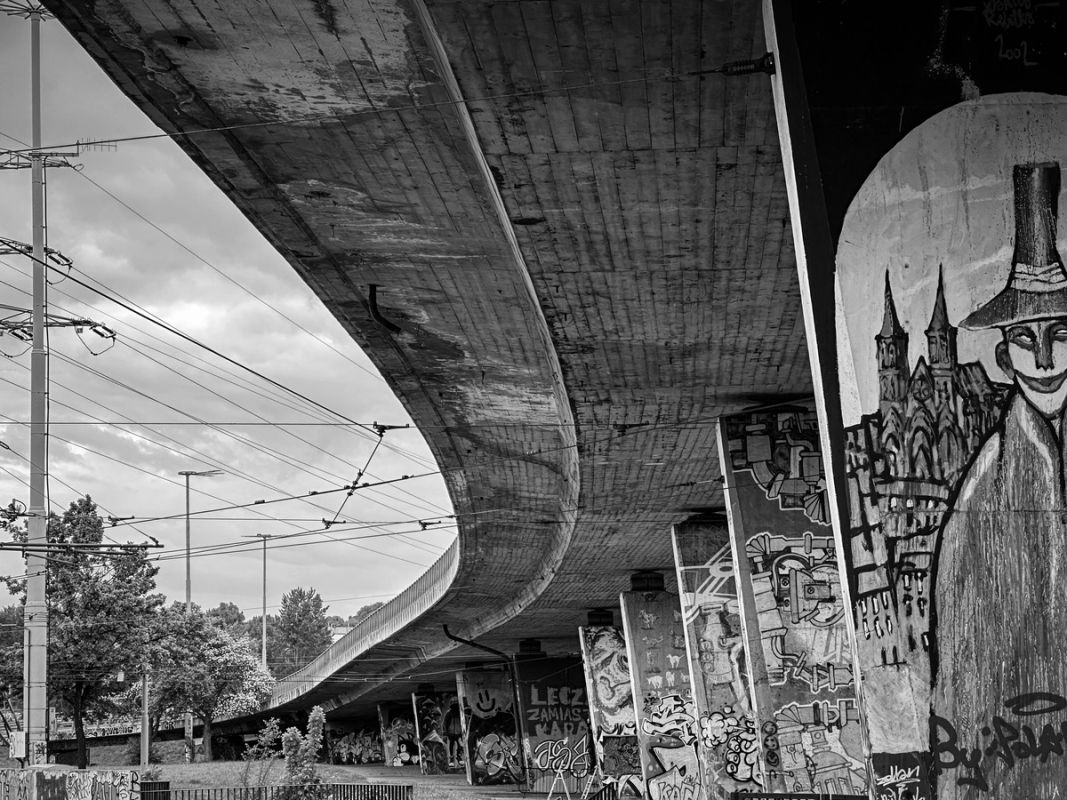
1. The junction occupies 10 hectares of a key part of the city. 2. The area is poorly planned, and the overpasses leave many inaccessible, unused spaces. 3. Maintaining the existing viaducts costs around 20 million PLN every 10 years. 4. The current design encourages cars to accelerate, only to stop at the next traffic light. 5. The junction is a barrier for pedestrians and cyclists. 6. It forms a visual obstruction. 7. There is no infrastructure for rainwater retention. There are many issues that need to be addressed...
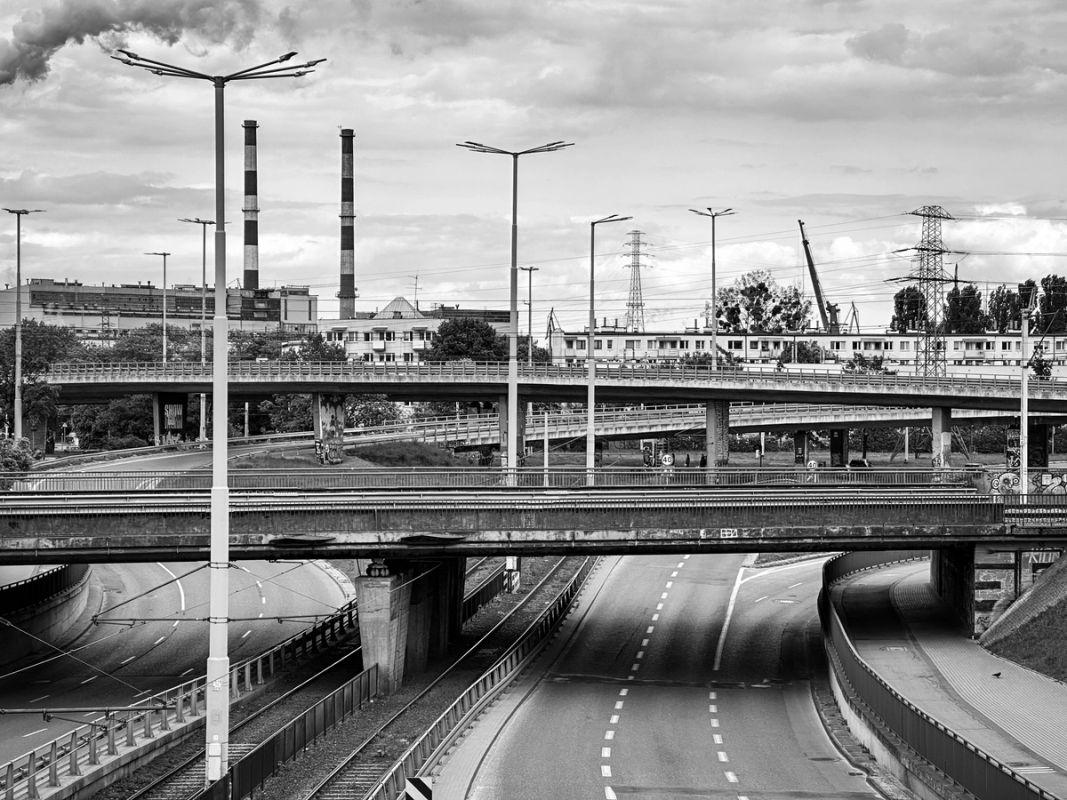
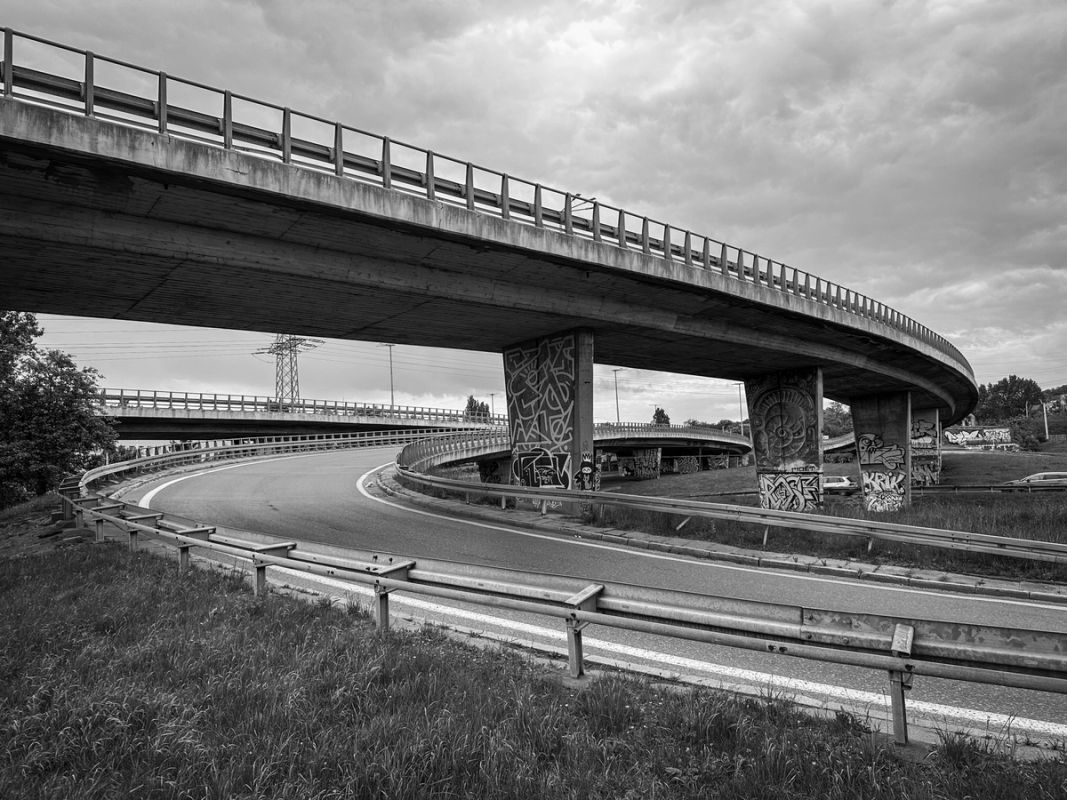
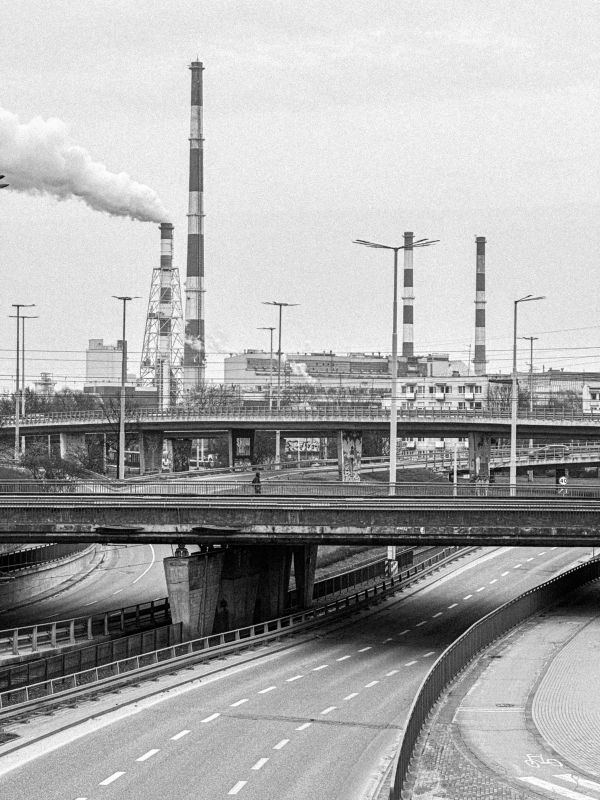
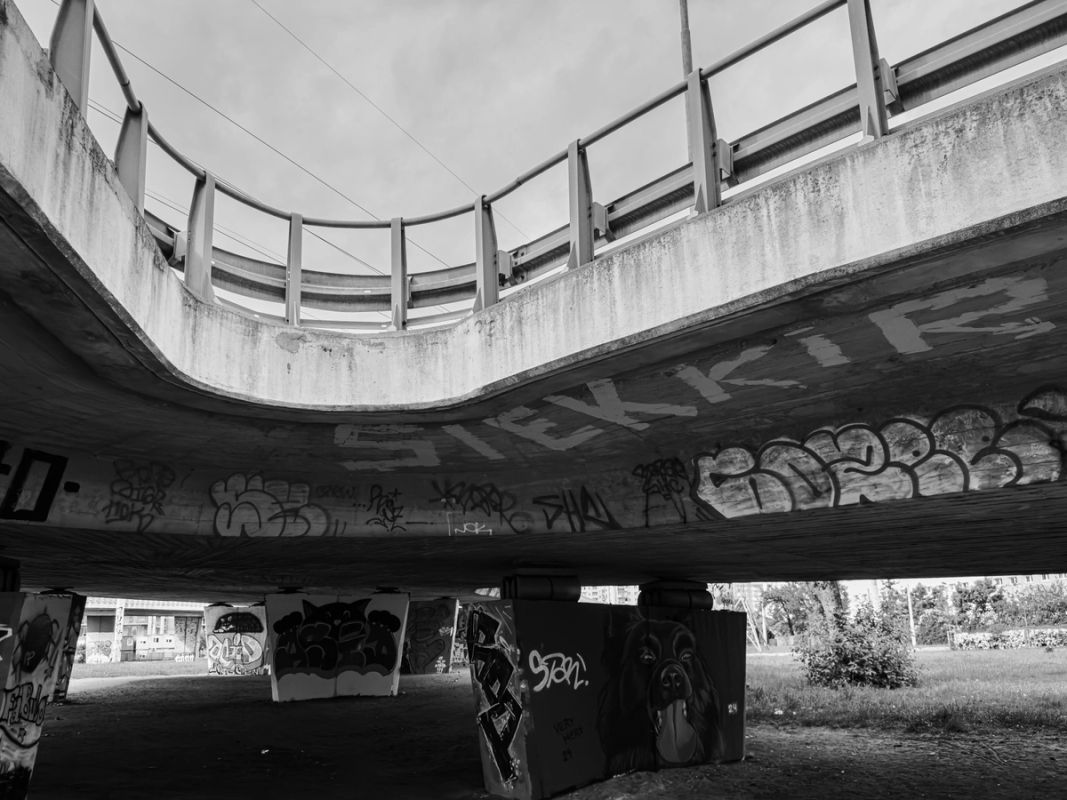
->Inspiration 1
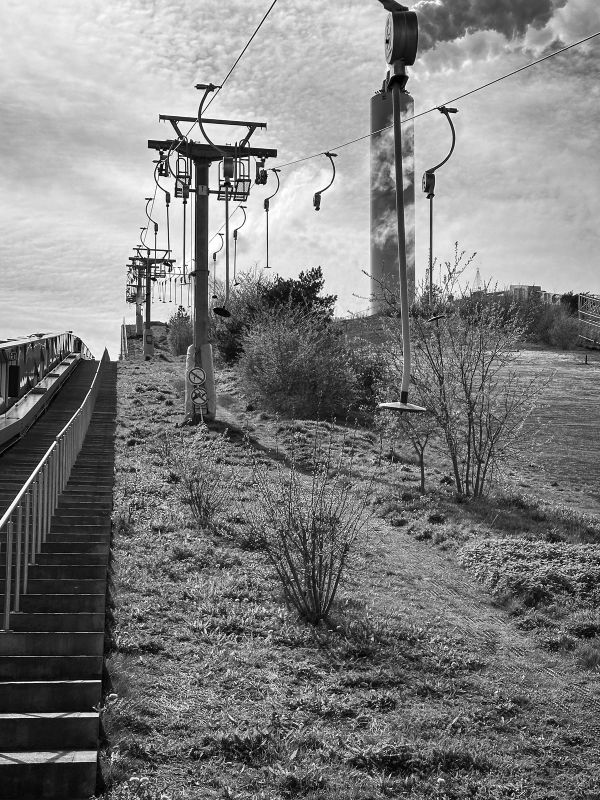
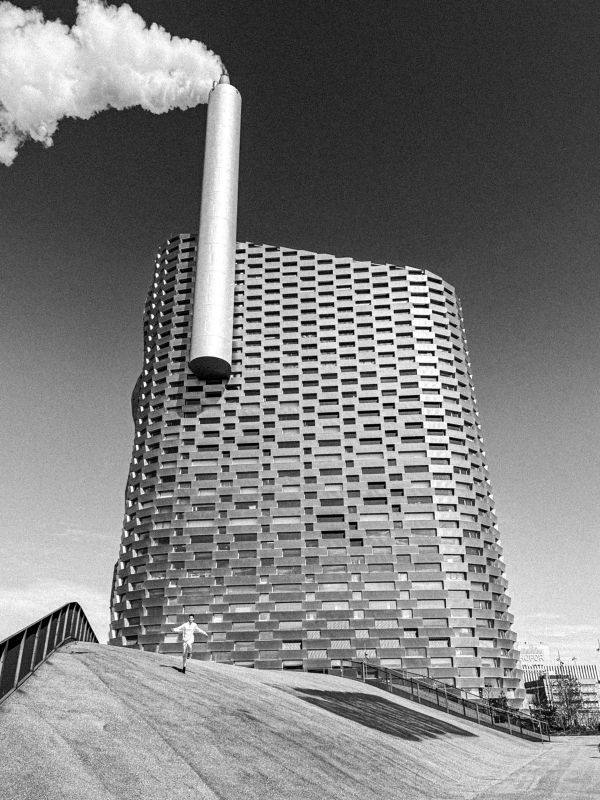
According to Bjarke Ingels, whose projects and ideas truly inspire me, when designing a piece of the city or a building, we shouldn't just solve existing problems—we should create something no one even asked for. In other words, every project should include an added value that improves the quality of life for the community, even if they didn’t know they needed it. (Like the ski slope on the roof of the Copenhill waste-to-energy plant, designed by Ingels.) I believe this is crucial if we want to make a real impact on our surroundings. That’s why this became the main goal of my project.
Unconventional problems require unconventional solutions
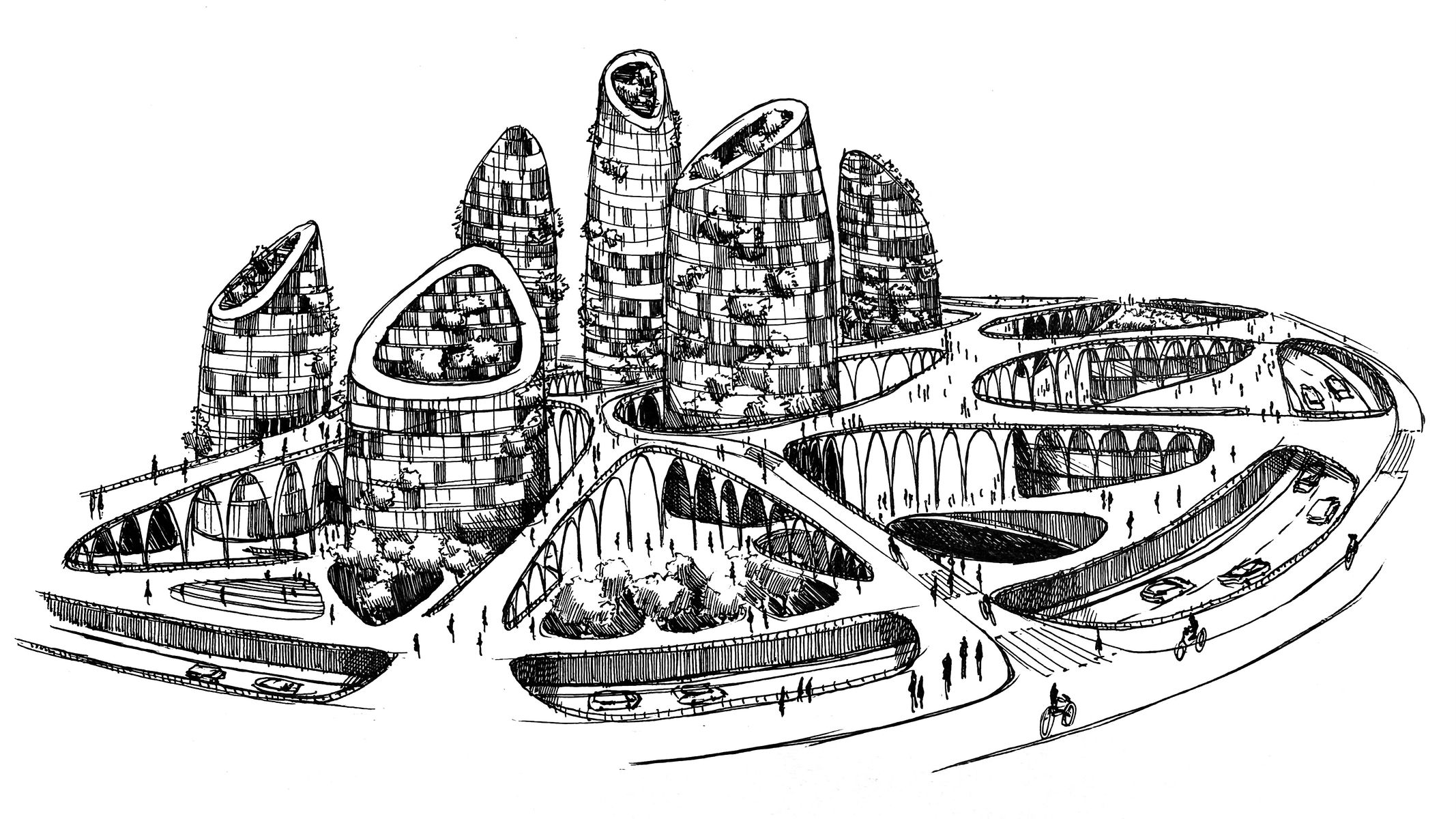
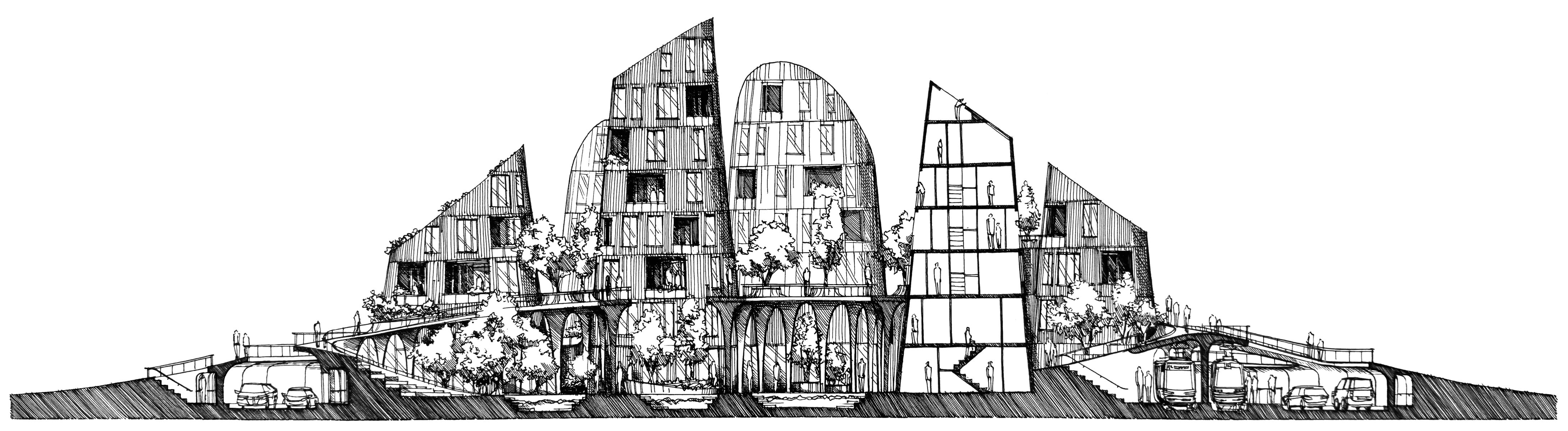
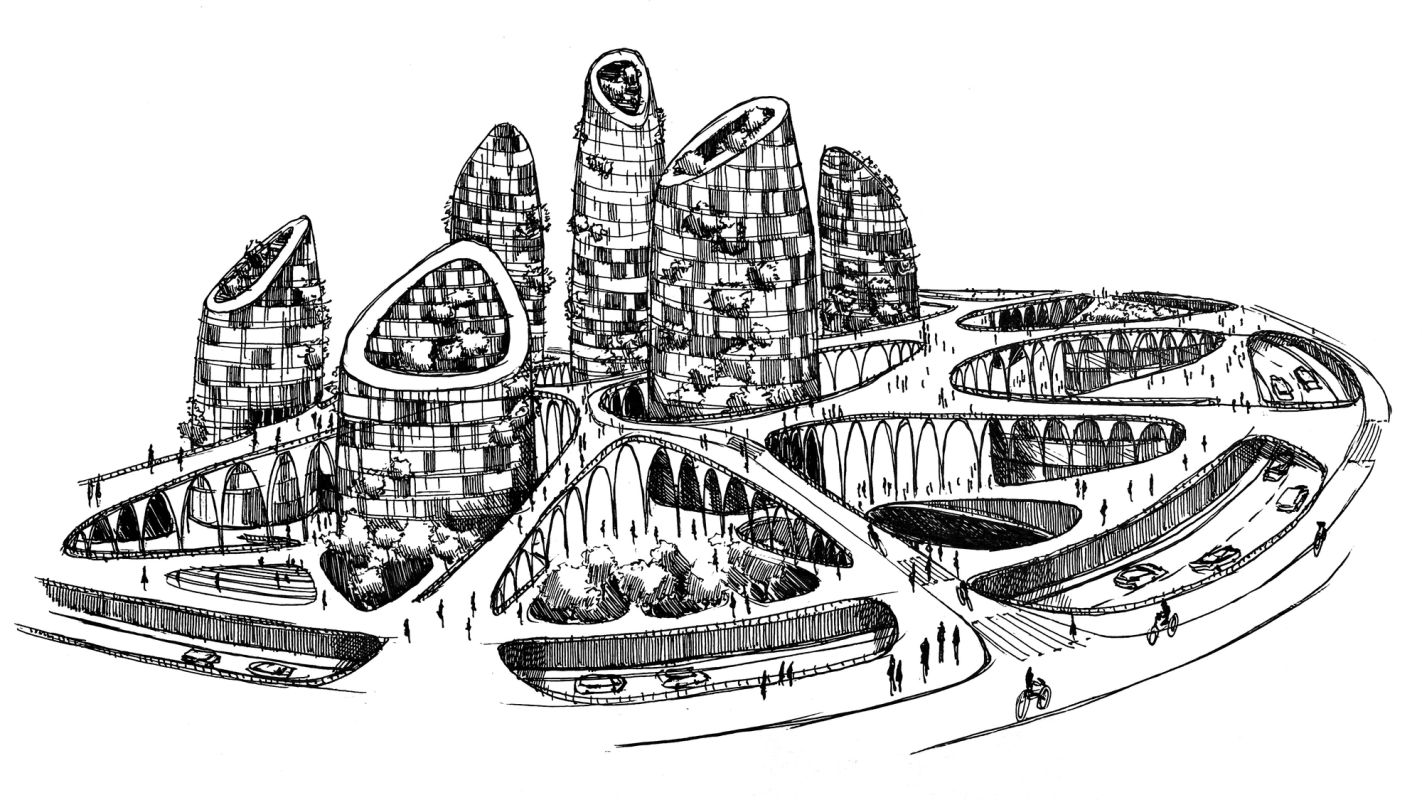
Building a standard ground-level intersection might work for vehicles, but it would still restrict pedestrian movement and divide the neighborhood. The future junction should prioritize people. That’s why my design is shaped around the most frequently used pedestrian paths. From now on, the viaducts serve pedestrian traffic, allowing people to cross the area easily and safely without using street-level crosswalks. They connect key places – the Politechnika SKM station, bus stops, and the residential area.
->Inspiration 2
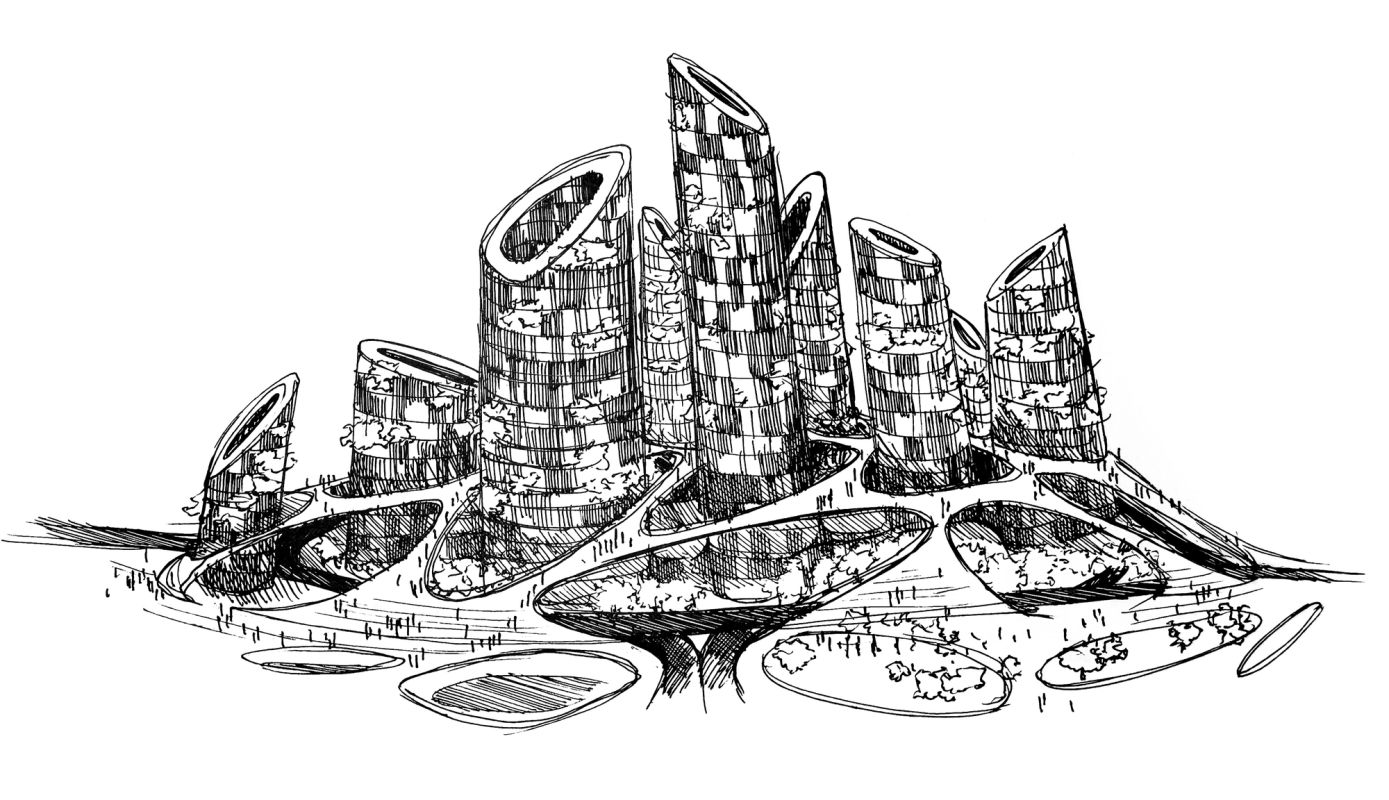
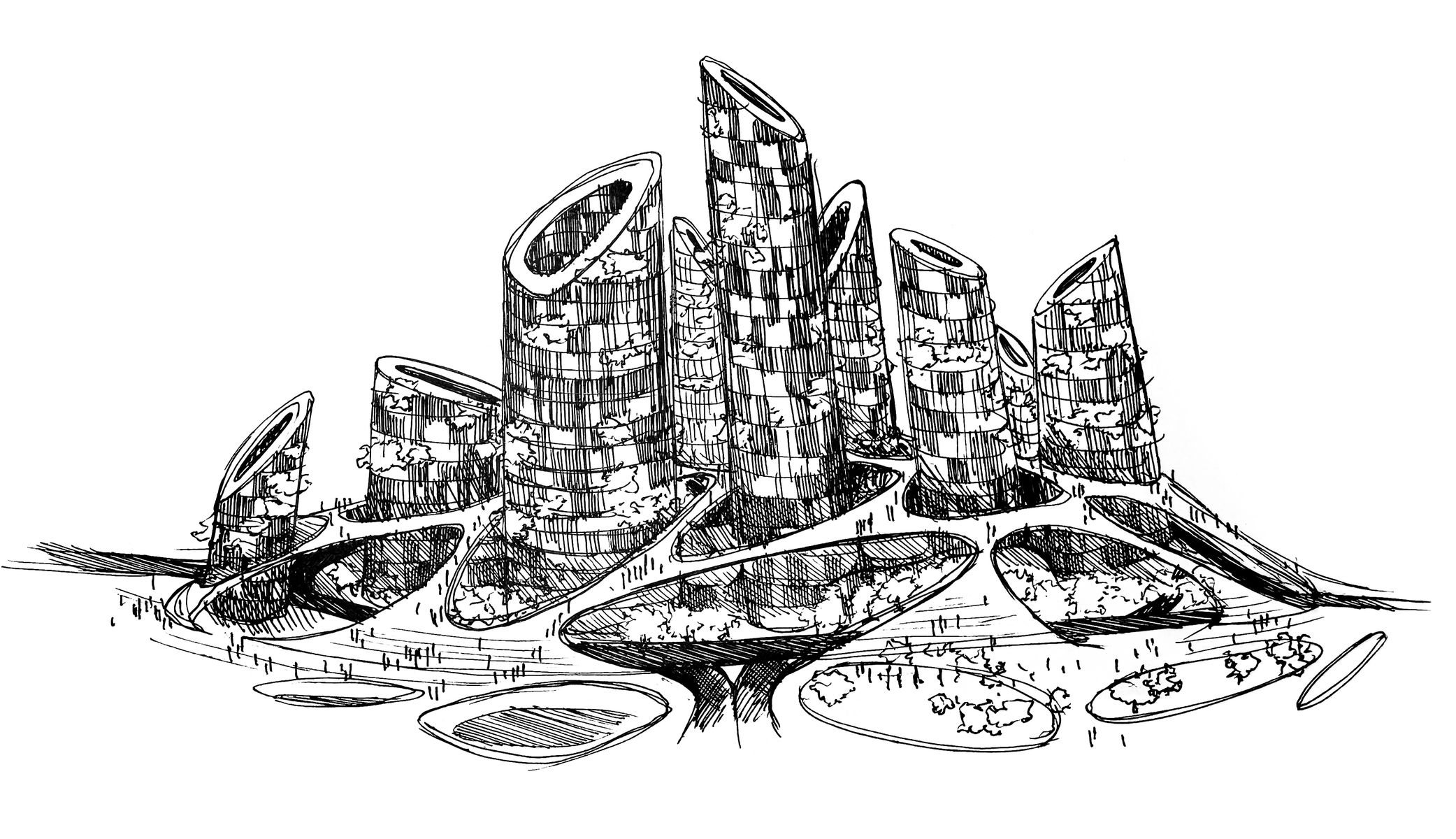
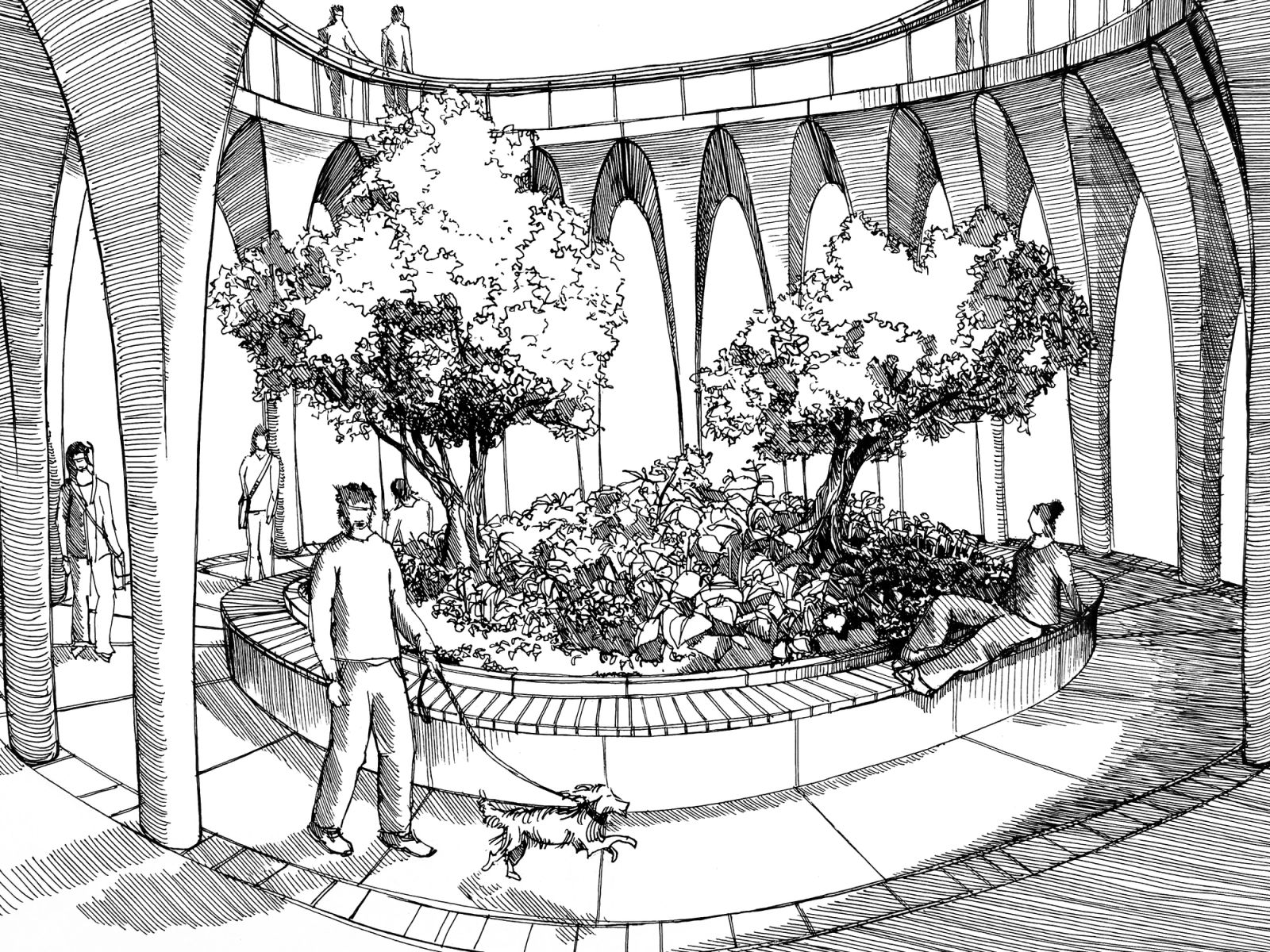
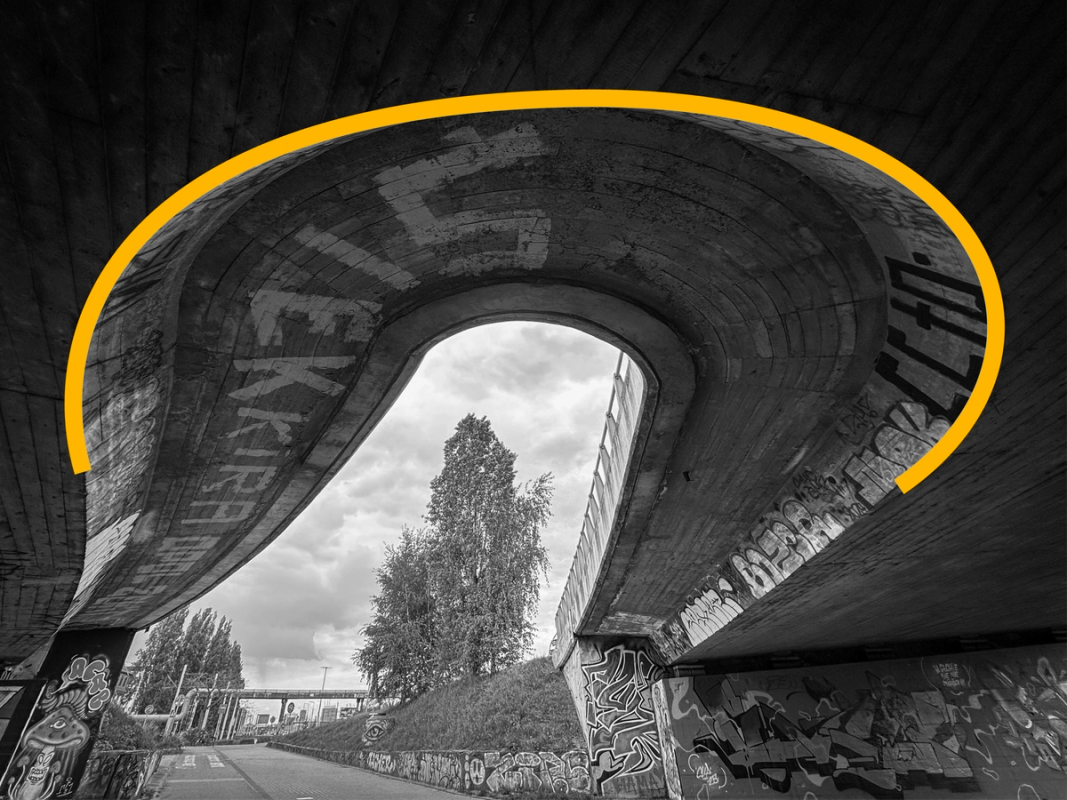
Before I started designing, I visited the site and noticed a curved connection between two overpasses. That’s when the idea struck me – to guide pedestrian traffic on the upper level and route vehicular traffic below. I decided to shape the entire structure as a hill with organic-shaped cutouts that let sunlight into the interior and encourage a natural pedestrian flow through their smooth, rounded forms. The project aims to preserve as much of the existing structure as possible and reuse materials from demolition on-site to reduce both cost and carbon emissions. Slim supporting columns form arcades, giving the structure a sense of visual lightness.
Before I started designing, I visited the site and noticed a curved connection between two overpasses. That’s when the idea struck me – to guide pedestrian traffic on the upper level and route vehicular traffic below. I decided to shape the entire structure as a hill with organic-shaped cutouts that let sunlight into the interior and encourage a natural pedestrian flow through their smooth, rounded forms.
The project aims to preserve as much of the existing structure as possible and reuse materials from demolition on-site to reduce both cost and carbon emissions. Slim supporting columns form arcades, giving the structure a sense of visual lightness.
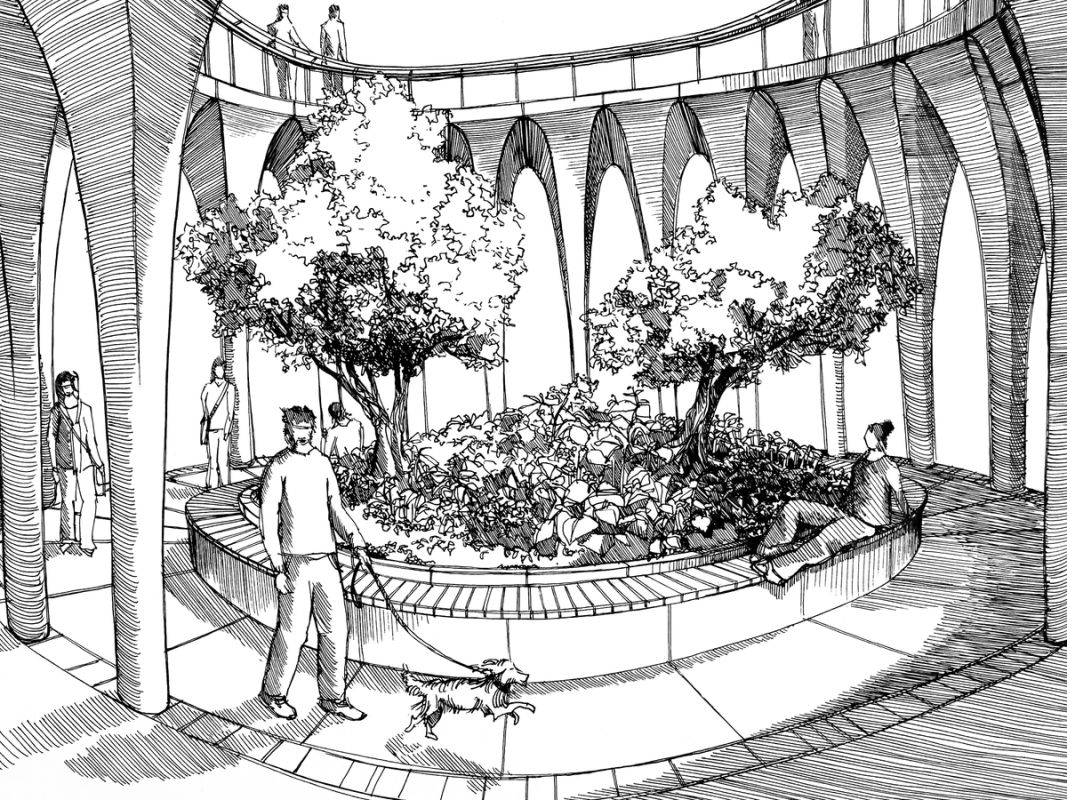
The cutouts in the hill become green oases for residents to relax. They create numerous gathering spots and green areas, which are currently missing in this neighborhood. Thanks to the hill-like shape, rainwater retention is also solved – water flows into retention tanks and then into the nearby Strzyża stream.
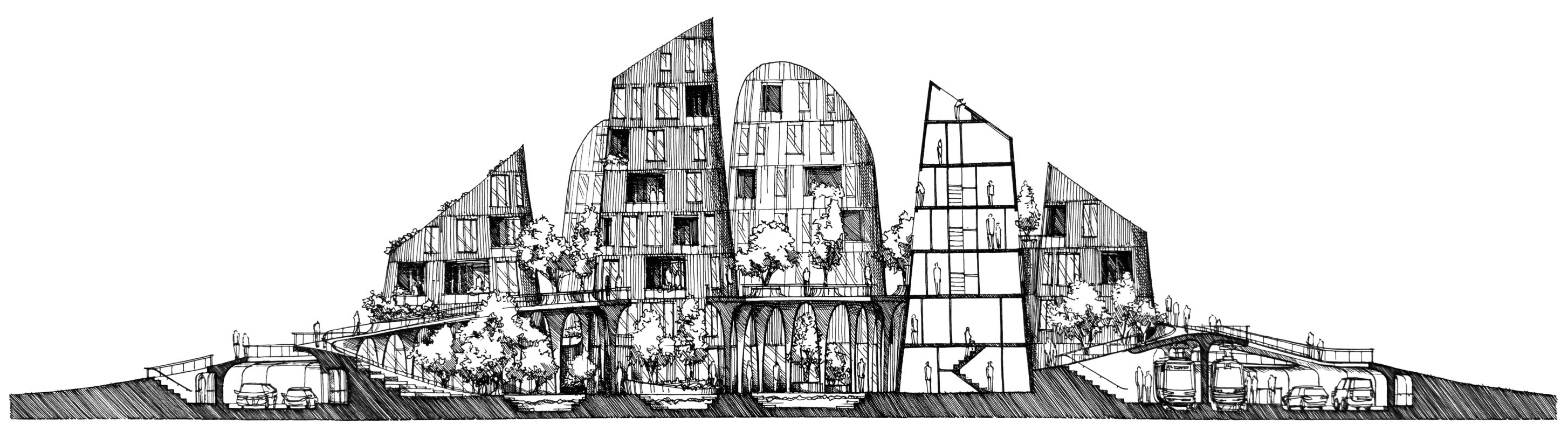
Some of the cutouts “grow” into buildings with organic forms. Their height gradually decreases as they approach existing buildings to preserve daylight access. Residential and office towers are connected beneath the surface of the hill via a shared podium, which houses larger facilities like a shopping center, cultural venue, or parking garage.
->Inspiration 3
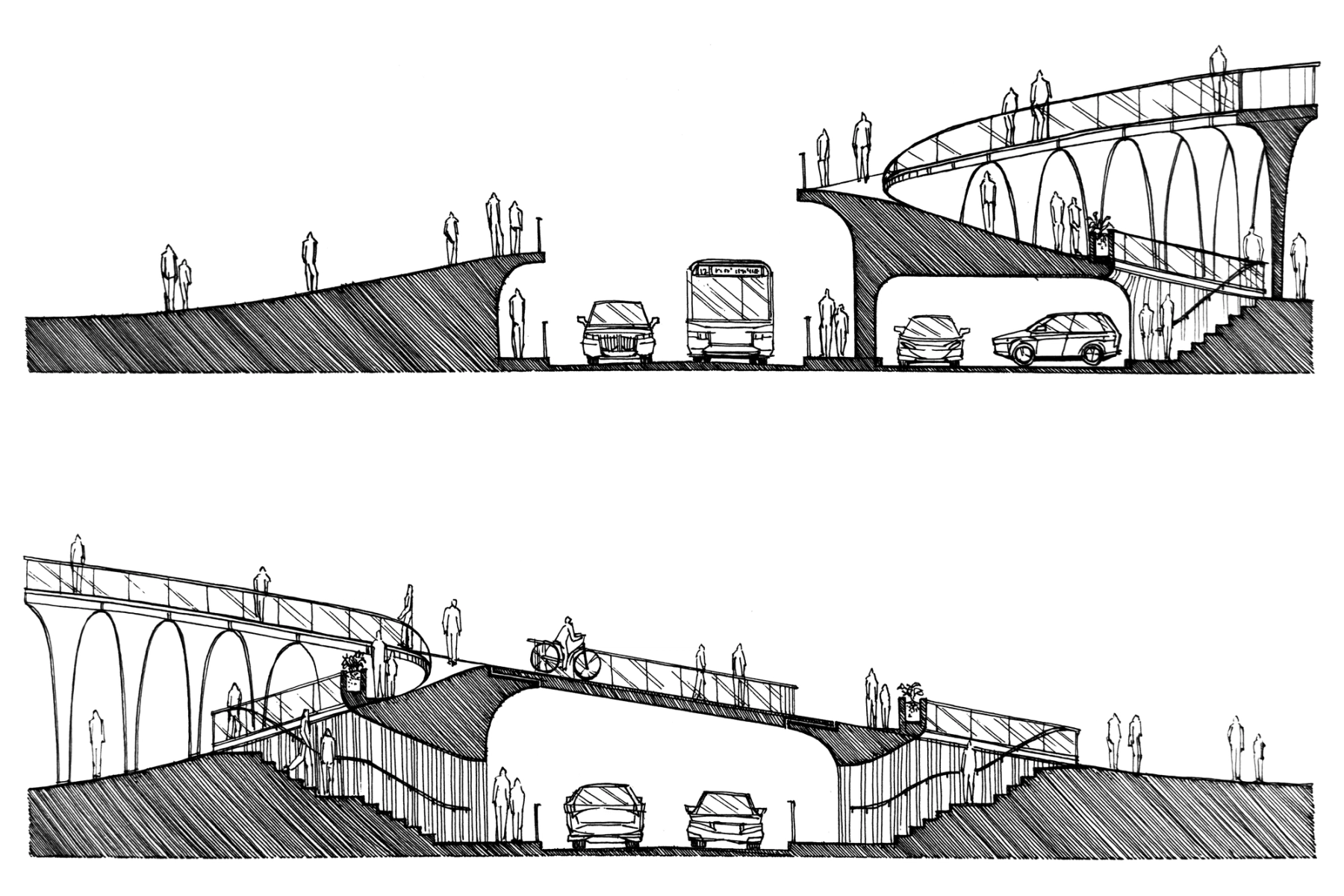
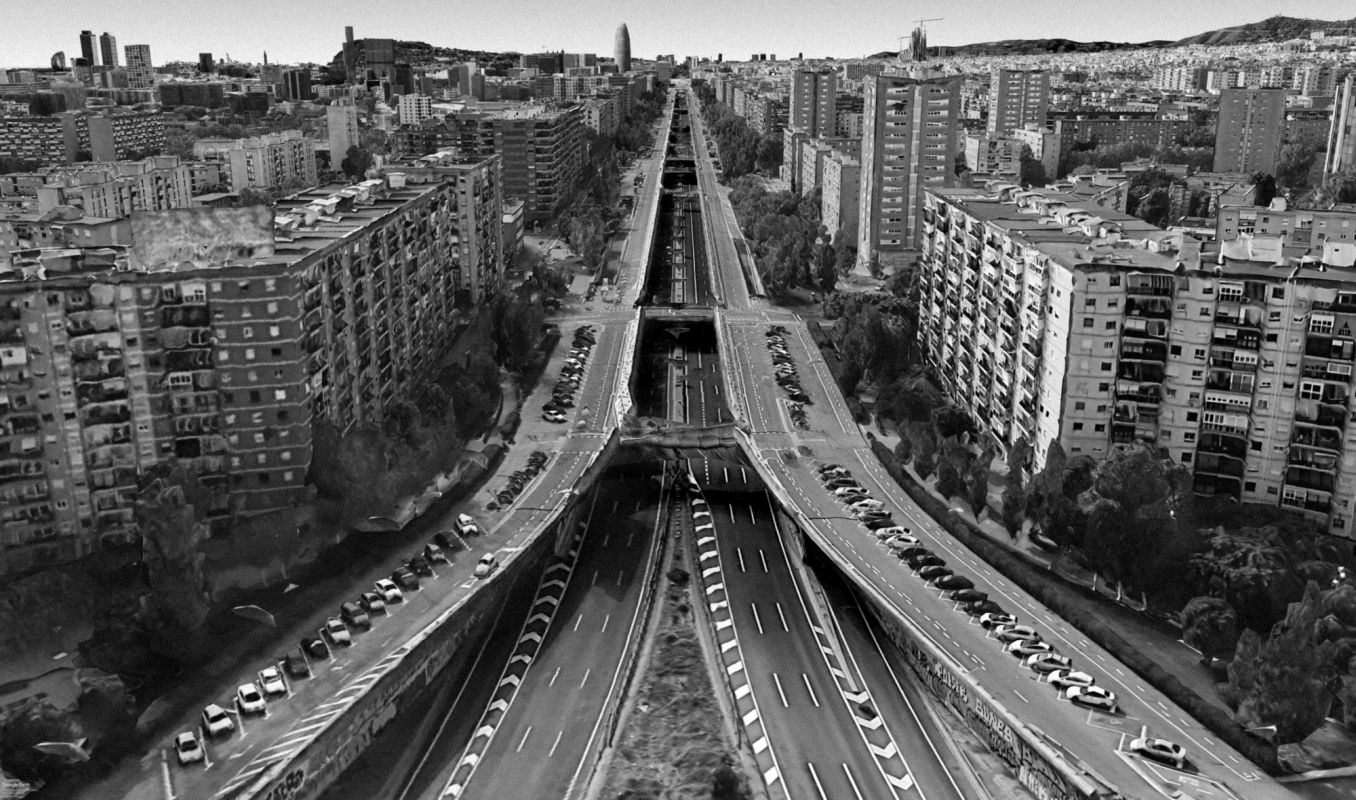
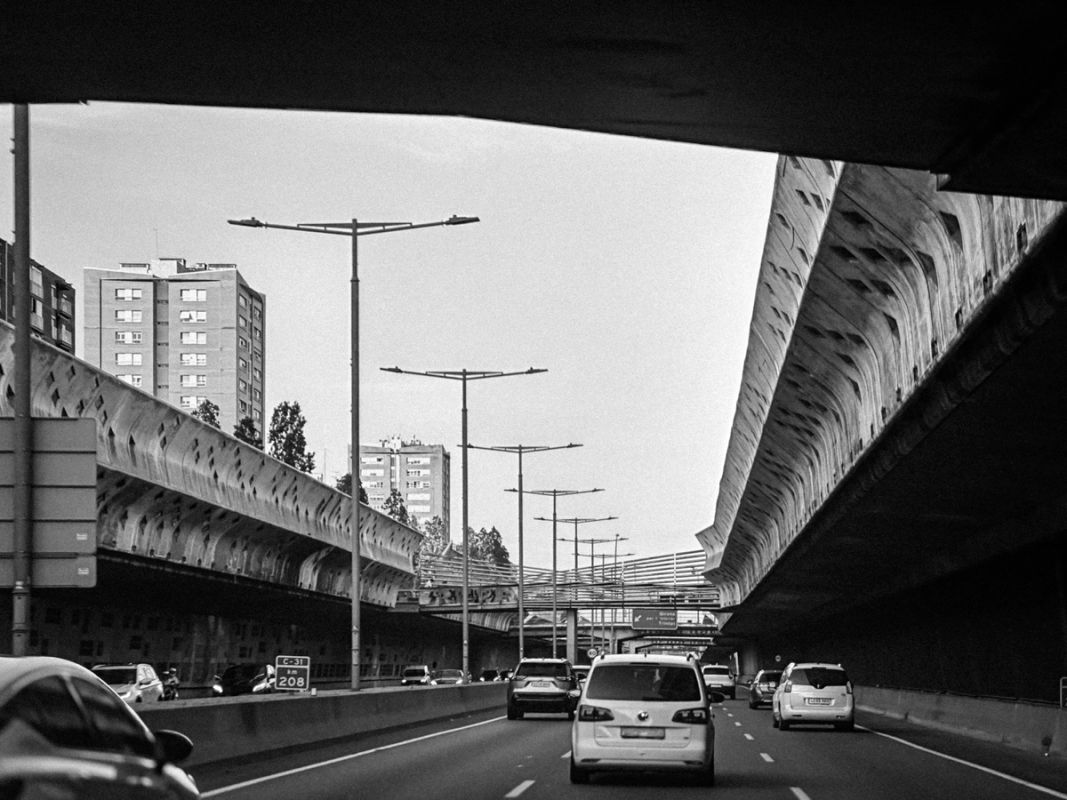
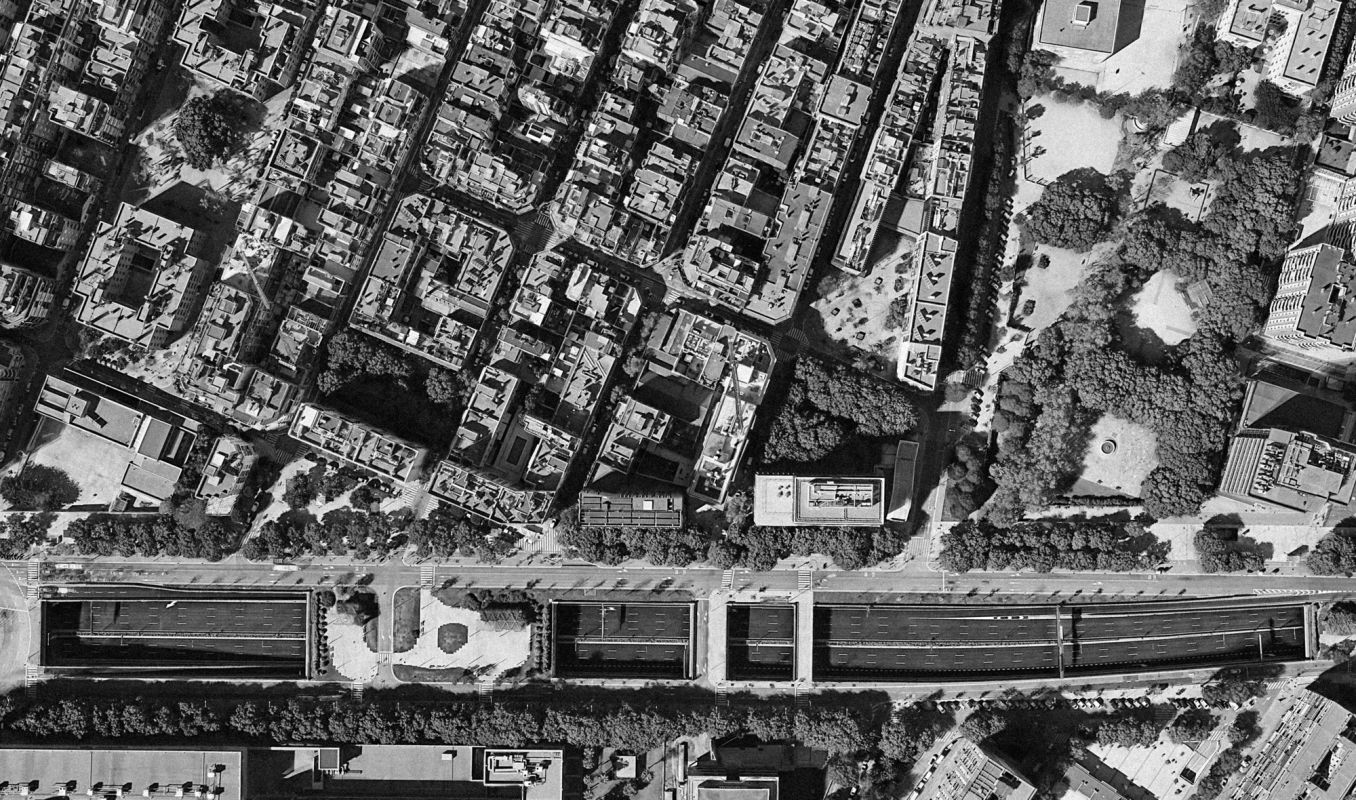
To avoid building costly tunnels for cars and railways, I drew inspiration from Barcelona’s Gran Via de les Corts Catalanes. I shaped the terrain so that roads run between embankments, below city level. This reduces noise, separates cars from pedestrians, and allows for walkways above the streets. Roads and tram lines circle the entire complex, forming a large roundabout that improves traffic flow. The “Politechnika SKM” tram stop becomes integrated with the train station, while the “Twarda” stop is located in the central part of the complex. The junction thus becomes a multi-modal transport hub, connecting various parts of the city.
To avoid building costly tunnels for cars and railways, I drew inspiration from Barcelona’s Gran Via de les Corts Catalanes. I shaped the terrain so that roads run between embankments, below city level. This reduces noise, separates cars from pedestrians, and allows for walkways above the streets.
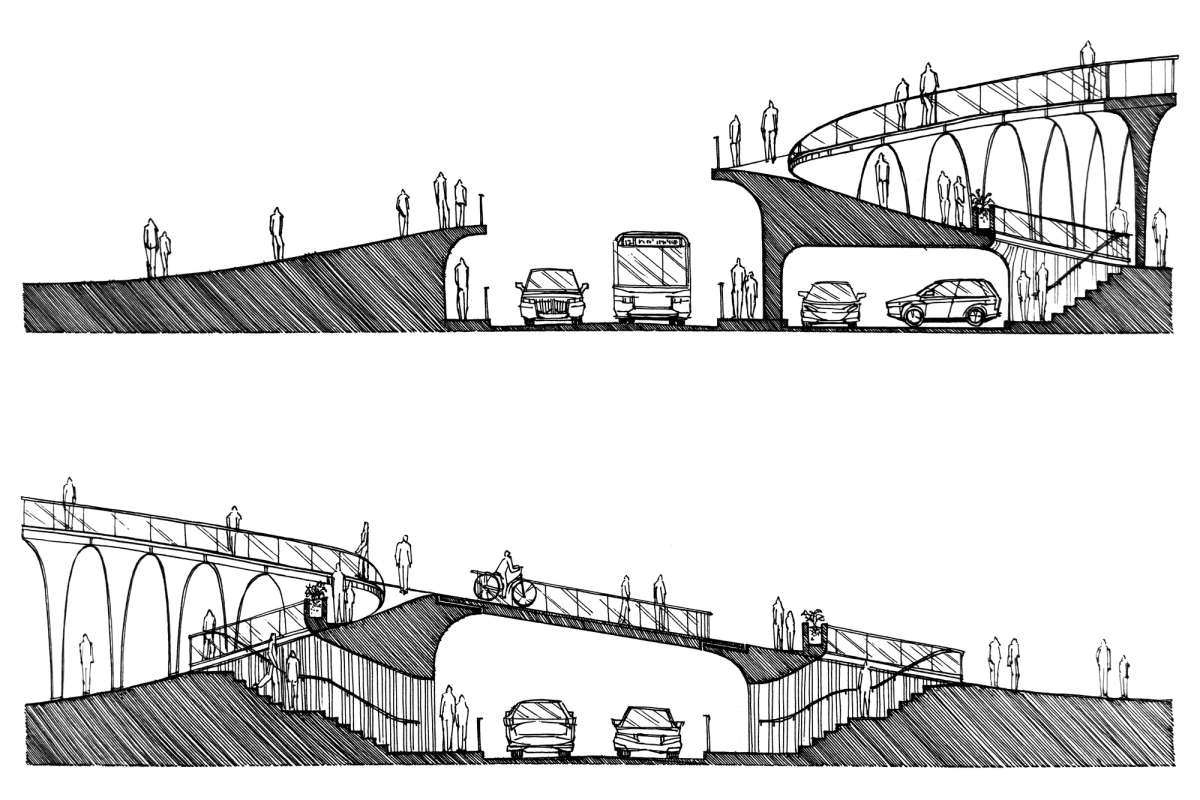
Roads and tram lines circle the entire complex, forming a large roundabout that improves traffic flow. The “Politechnika SKM” tram stop becomes integrated with the train station, while the “Twarda” stop is located in the central part of the complex. The junction thus becomes a multi-modal transport hub, connecting various parts of the city.
What does Gdańsk gain?
Following Bjarke Ingels’ philosophy, my project not only addresses current challenges like inefficient land use and lack of water retention but also creates a new, multifunctional public space for Gdańsk residents. The proposed residential-business-retail center could become a new city landmark.
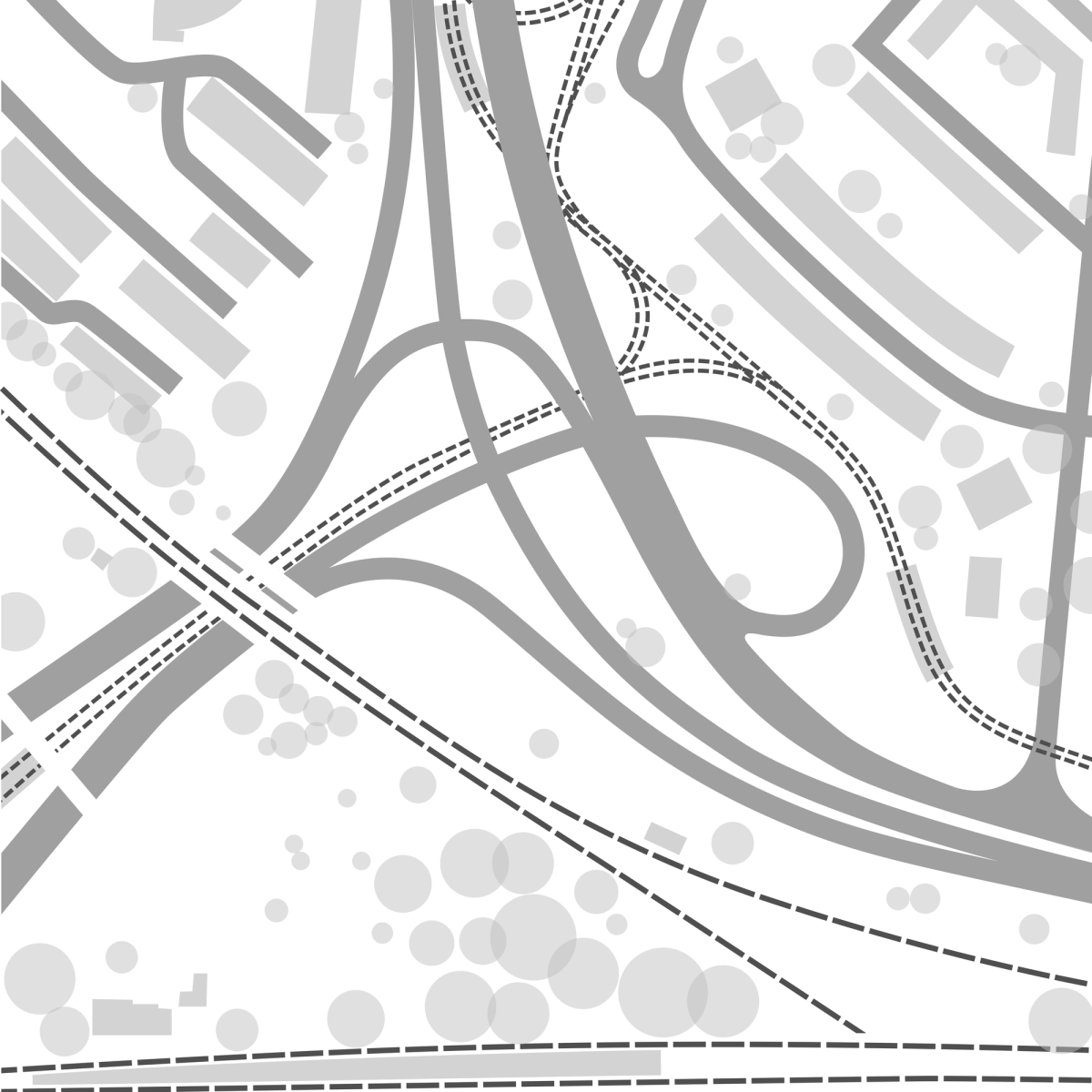
1. Current State
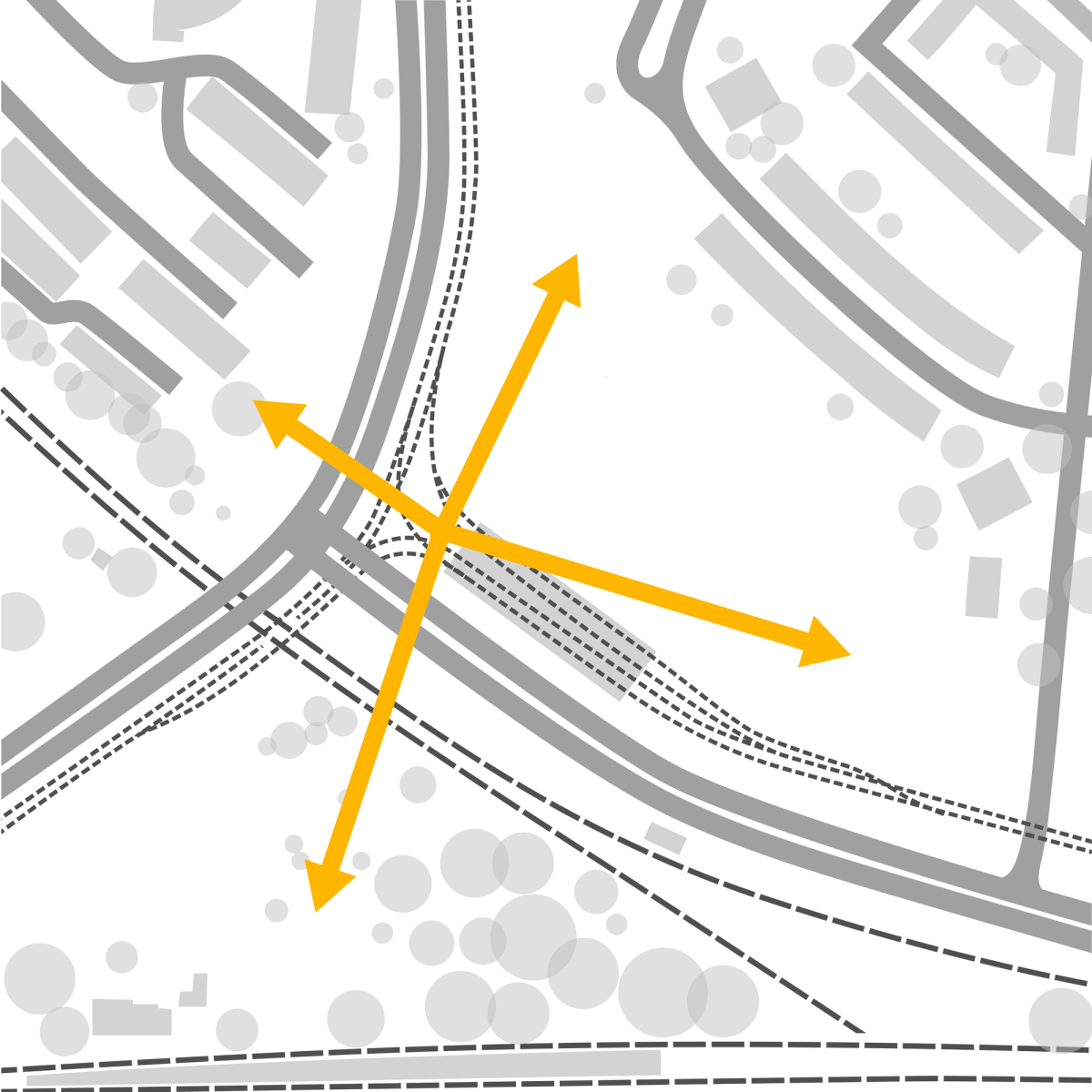
2. A ground-level intersection would be suitable for vehicle traffic but would still pose an obstacle for pedestrians.
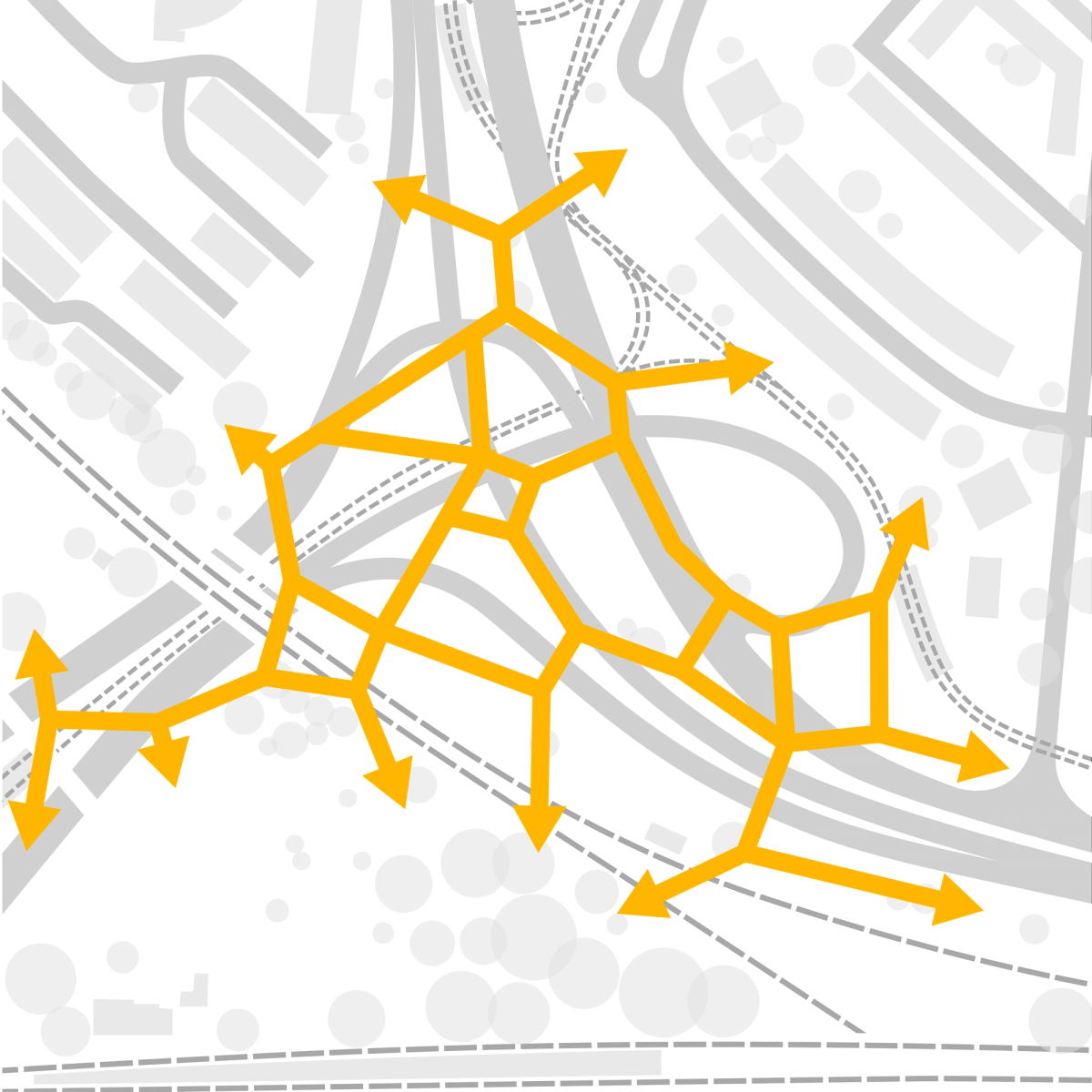
3. The new design of the area is shaped by the most frequently used pedestrian routes. Vehicle traffic is directed below ground level.
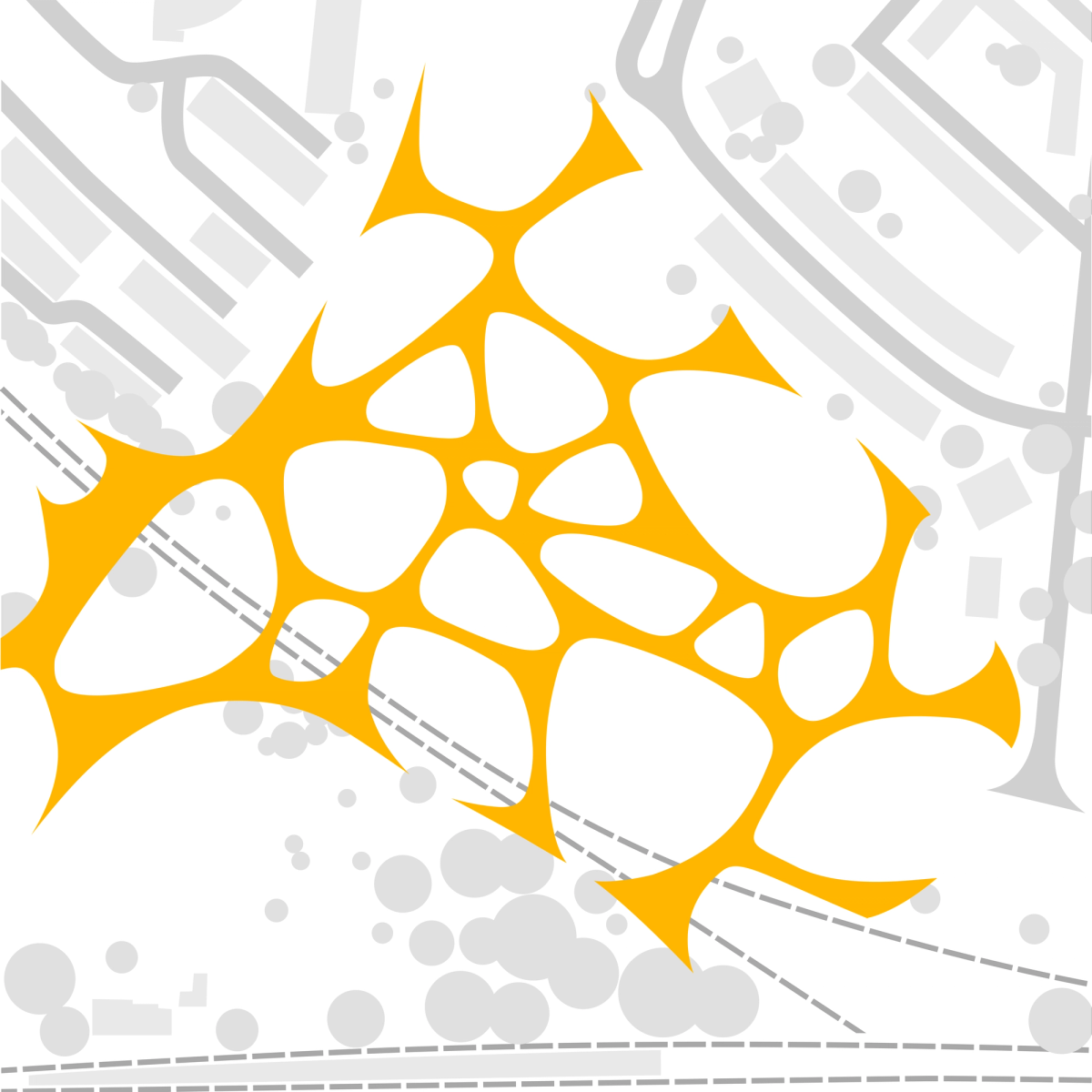
4. Pedestrian overpasses seamlessly connect, forming a hill with organic cutouts.
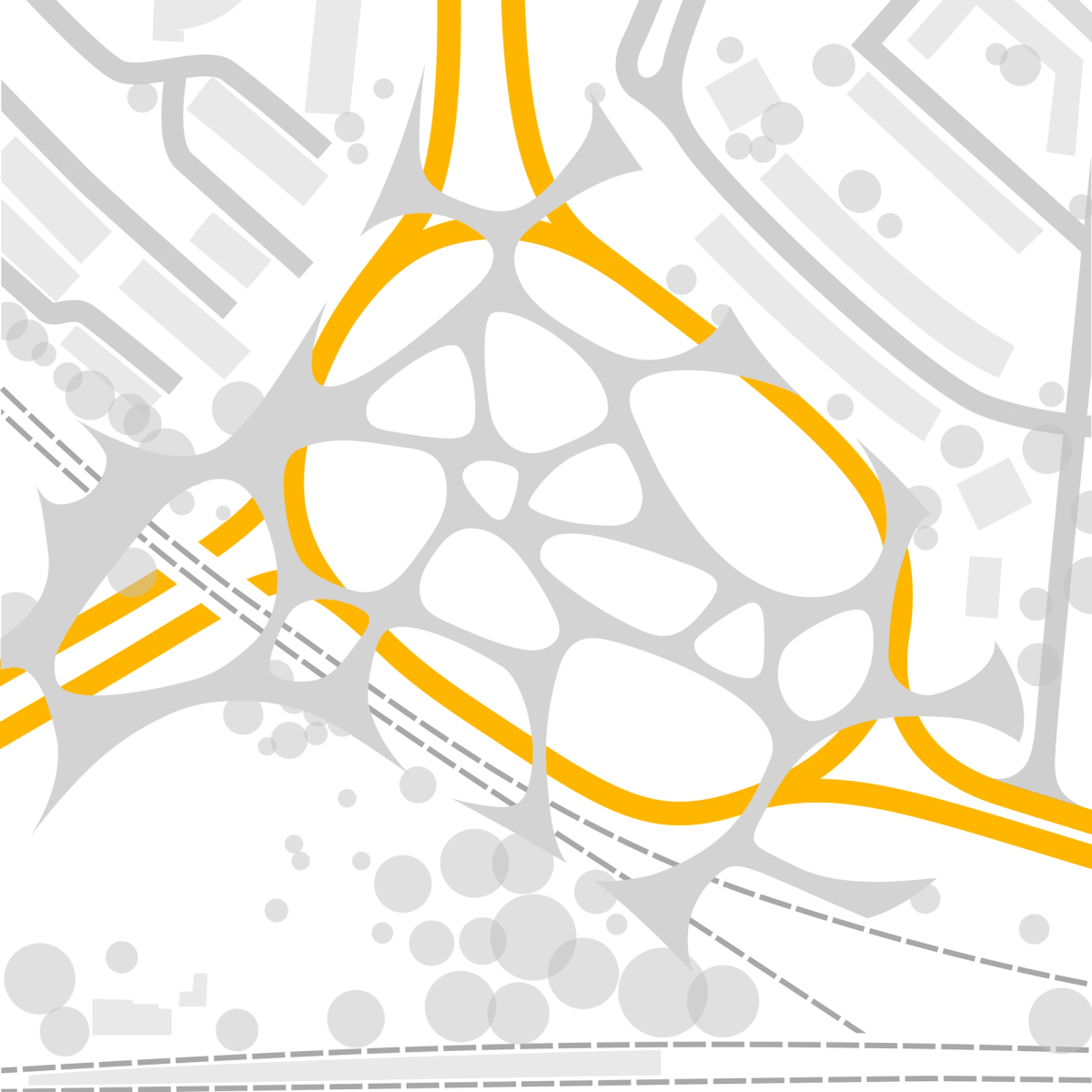
5. The road layout forms a roundabout, improving the flow of car traffic.
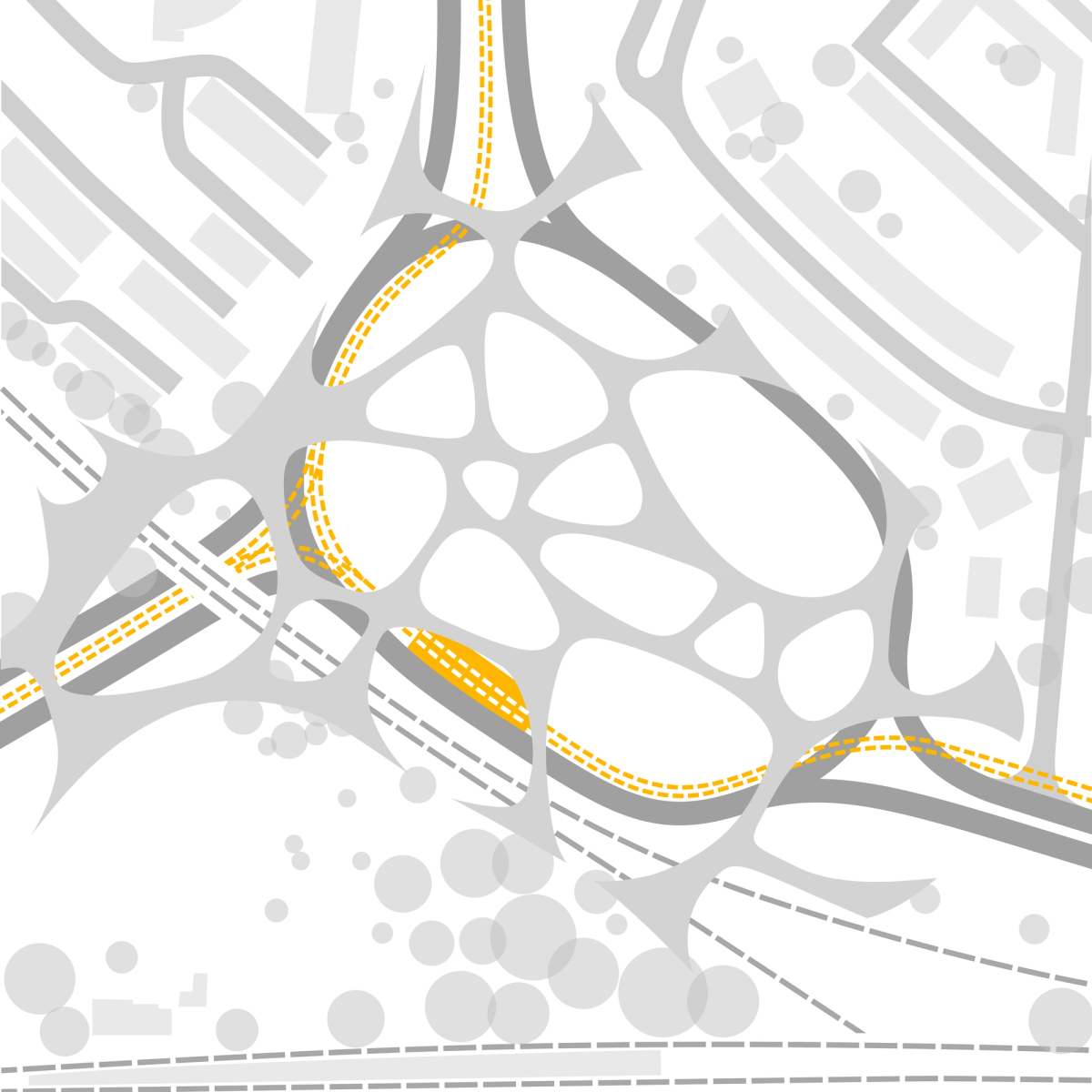
6. Tram tracks run alongside the roads, and the "Politechnika SKM" stop is integrated with the railway station, creating an intermodal transfer hub.
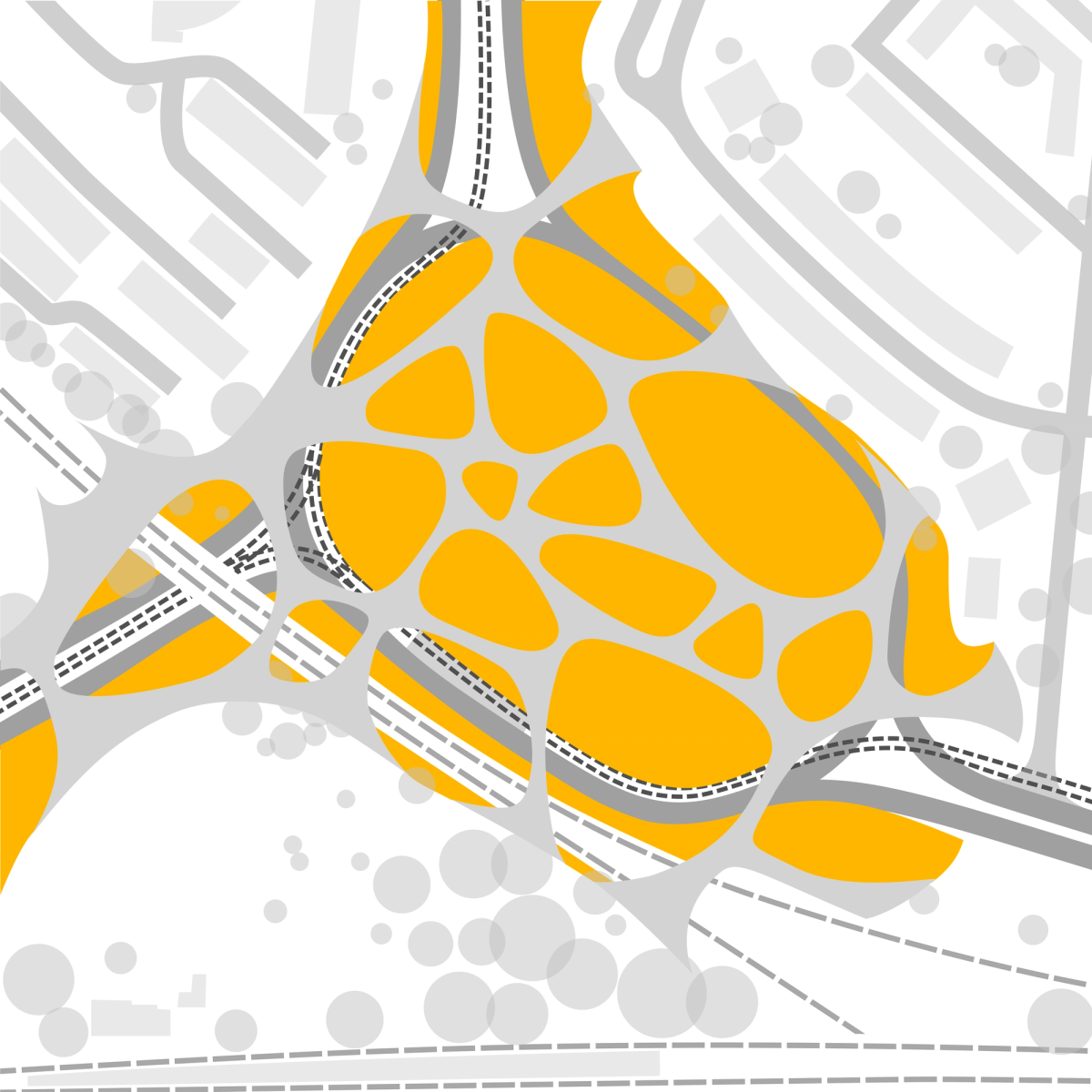
7. Car, tram, and rail traffic is separated from pedestrian movement through terrain shaping and routing roads between embankments.
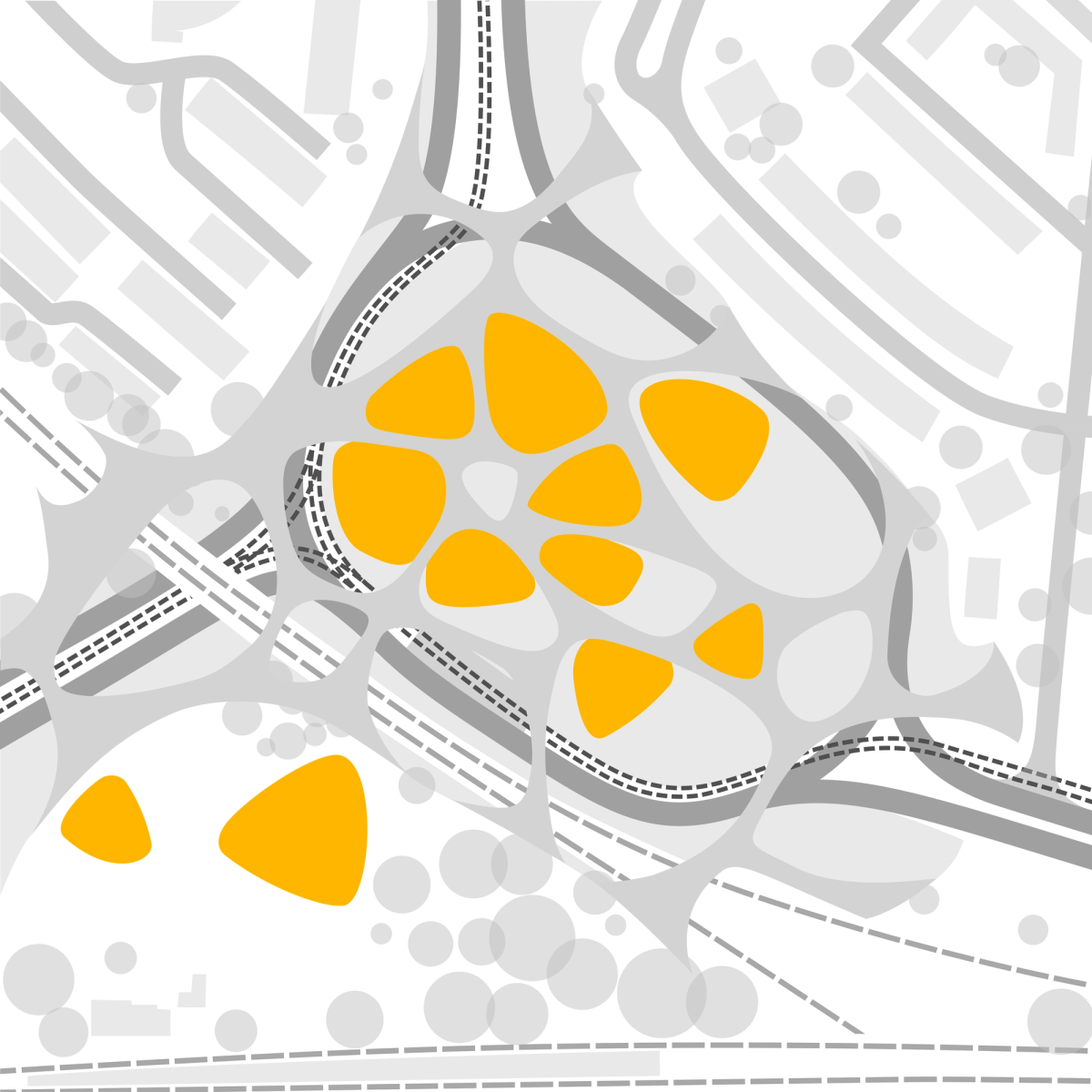
8. Buildings rise from some of the cutouts.
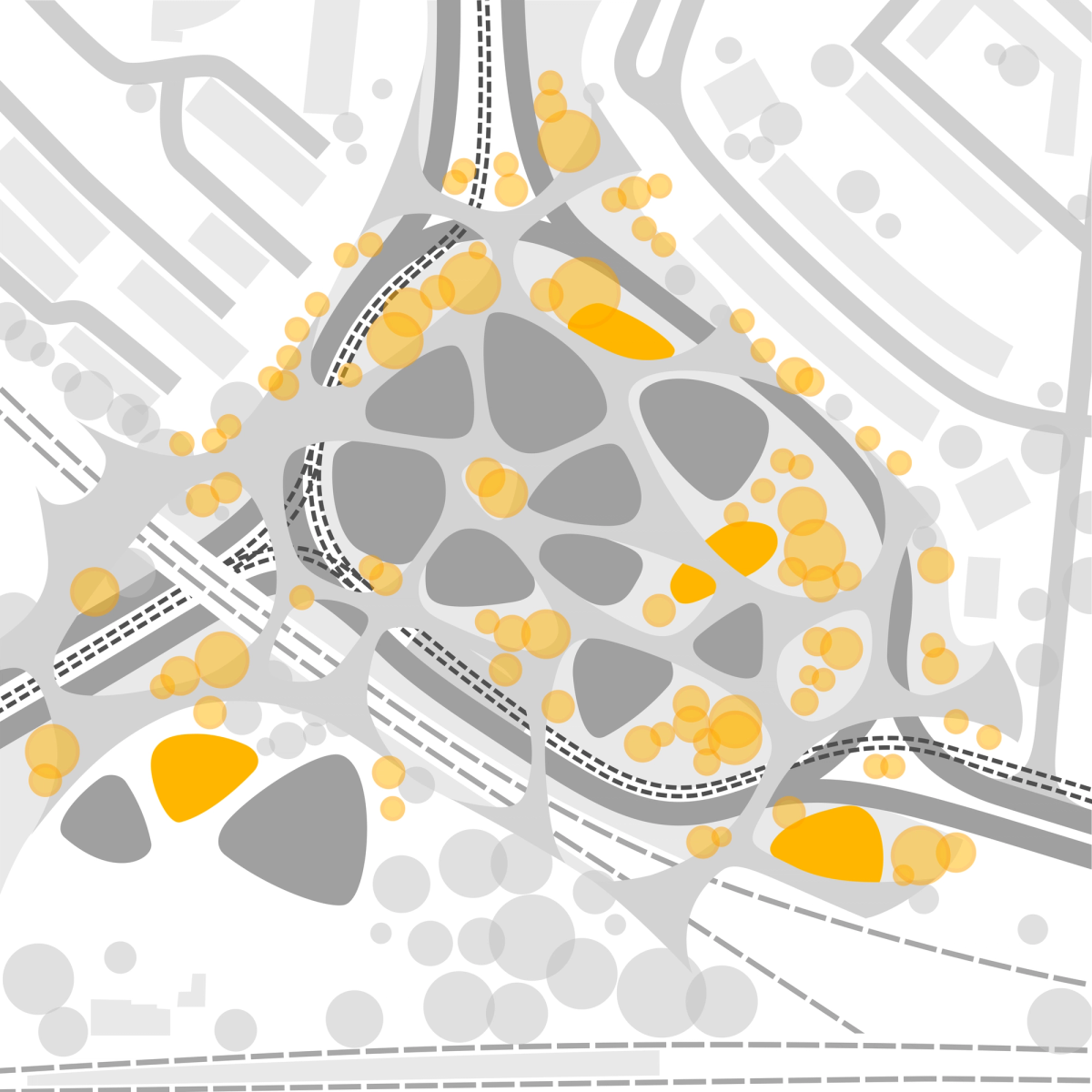
9. Other openings in the hill accommodate green spaces, retention basins, and meeting places for residents.
Public reaction
My vision for Kliniczna Junction has been recognized by architects and experts from the City Architect’s Office and was featured in two articles:
“The bold vision of a high school student. This is how he redesigned the Kliniczna junction in Gdańsk.”->whitemad.pl
“In this project, everything is reversed. Pedestrians and cyclists use the overpasses, while car traffic is moved underground.”->gdansk.pl